



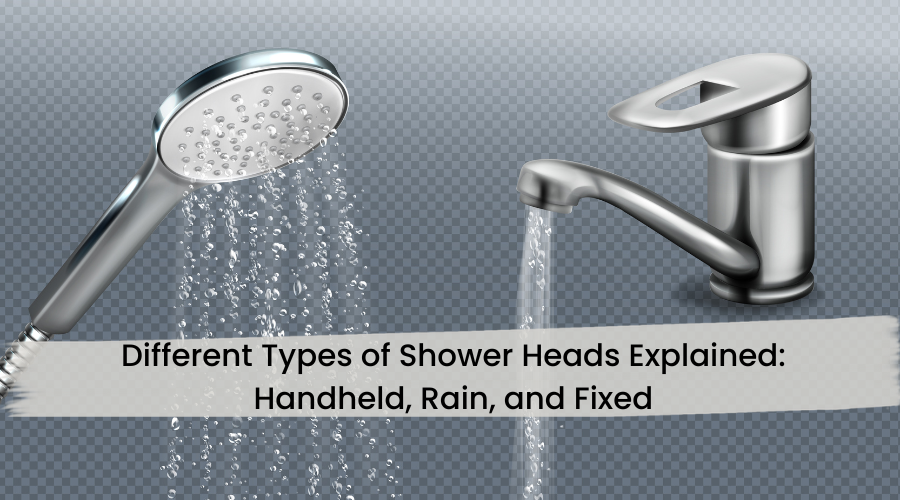
Shower heads are available in various styles that control the waterflow. Each has advantages and is better suited to specific situations. Knowing the differences enables contractors and retailers to select the correct products. Whether it is a shower head supplier for a construction project or a wholesale shower head for a retail outlet, one knows what is special about each type and thus makes better purchases.
The fixed shower heads are mounted on the shower arm protruding from the wall. They are fixed in place and cannot be moved during use. There is only one fixed water spray point. This is a classic style that has been used in bathrooms for decades. A shower head manufacturer produces fixed shower heads in various sizes and spray patterns. The most basic models have only a single spray mode, whereas more sophisticated models offer more. The user adjusts the showerhead controls to manage the spray patterns.
Fitted shower heads are easy to install. The shower head is attached to the existing shower arm pipe. Installation of most of them can be done by hand-tightening or with a wrench. No special plumbing changes are required. The angle of the shower arm can control the water spray. Normative installations ensure the spray strikes the mid-center of the tub or shower area. On certain models, adjustable ball joints can be used to slightly adjust angles without replumbing.
They are cheaper than other types with fixed shower heads. They are designed to have fewer parts that might fail or malfunction. This is what makes them a reliable choice of rental property and cost-efficient installations. Fixed designs require minimal maintenance. Cleaning consists of wiping the surface and, in some cases, eliminating mineral deposits on spray nozzles. This reduces the number of moving parts and, hence, the time during which things can go wrong is limited.
It is common to see fixed shower heads in many hotels and apartment buildings. The minimal design can withstand heavy usage by multiple users. Low maintenance and easy replacement when necessary are things property managers like. Fixed budget models are often used when renovating bathrooms. New building projects with limited budgets select these cost-effective options. Wholesale shower head order of fixed models offers the highest units per dollar.
Handheld showerheads connect to a flexible hose and the shower arm. The user is able to pull out the shower head from its wall bracket and move the water anywhere required. The water spray can be moved around the shower area using the hose. Most handheld models include a wall bracket that stores the shower head when not in use. This bracket is approximately the same height as the attached shower heads. Users can shower without touching their head, either leaving it in the bracket or removing it.
Installing handheld shower heads involves mounting the fitting to the shower wall. The bracket is fixed using screws to the wall studs or wall anchors. The flexible hose then connects the shower arm to the handheld shower head unit. In some installations, the entire shower arm is replaced with a slide bar system. The bracket height can be adjusted using the slider. Such flexibility allows for varying user heights and preferences.
Handheld showerheads are as flexible as possible, accommodating a wide range of bathing needs. Users can control water at any point and time. This control enables easy, in-depth rinsing of specific body parts.
The handheld models make cleaning shower enclosures easier. Users will be able to spray down walls, doors, and tube surfaces after bathing. It is also less time-consuming when water can be directed to remove soap scum and residue. Handheld flexibility is very advantageous to pet bathing and child washing. When washing children's hair, parents can control the direction of the water flow. Animals can be washed easily by their owners. Such practical applications offer added value beyond simple showering.
A wide variety of handheld shower heads have a multi-spray setting. The most common are massage, mist, and standard spray patterns. There are controls on the showerhead handle that let users switch between settings. Handheld models have pause buttons that stop the water stream without changing temperature settings. This design will reduce water use during soaping or shampooing. Rapid heating keeps the required water temperature.
The rain shower head can be mounted on the top of the head, usually on the ceiling or on the extension of a high wall. They generate water movement that falls directly down like rain. The size of the shower heads is typically much larger than standard ones, measuring 8 to 16 inches.
The sprays are applied to the entire body. It is water that falls softly instead of forcefully spraying. This is what makes the shower unusual compared to the conventional designs. The shower head manufacturer should design rain models to distribute water uniformly over a large surface area.
Rain shower heads are usually more difficult to install, and plumbing work is intensive. Models mounted on ceilings require water supply lines to run through the ceiling. This can be easily installed in new construction as compared to existing bathrooms. Wall-mounted shower heads are heavy units mounted on long shower arms. These are easier to install than ceiling mounts but require firm mounting to support the heavier showerhead.
The rain showerheads appeal to many buyers because of the spa-like experience. Soft flowing of water causes a calming, luxurious effect. High-end bathrooms often use rain models as the benchmark for premium quality. Full-body coverage implies less water spray during roaming. The extensive pattern extends across the shoulders, torso, and legs simultaneously. This convenience is especially attractive to individuals who want a fast, effective shower.
Rain shower heads often use more water than standard models. The large spray area requires higher flow rates to achieve full coverage. It addresses water conservation issues in water-restricted areas. Water pressure significantly affects the performance of the rain shower head. The effect of low-pressure systems may be detrimental to rainfall satisfaction. The most effective use of a place is to install booster pumps in homes with pressure issues. A shower head supplier can recommend the minimum pressure required for various models.
Other types, such as bathrooms, have fixed and handheld shower designs. A diverter valve allows switching between options or running both simultaneously. This combination offers maximum flexibility and convenience. The fixed one takes regular showering, and the handheld one is for special use, such as washing pets. They do not require changes to installation, and users can switch between them as needed. Many companies that make shower heads have now introduced matching sets.
Rain shower heads are gaining popularity in luxury bathrooms, with handheld ones. The rain head provides the primary shower experience, and the handheld provides precision when required. It is a combination of leisure and usefulness. Such combination systems necessitate more sophisticated plumbing and are expensive. Nevertheless, they offer the most diverse shower experience available. These premium systems are common in residential and high-end hospitality projects.
The shower needs of different households differ. Handheld flexibility is most beneficial for families with children or pets. Handheld models are also accessible in a safer way to elderly or mobility-restrained persons. Rain shower heads are attracted by adults who desire spa-like performances. Fixed models are adopted by those with basic needs and constrained by budgets. Knowledge of primary users can help identify the most appropriate user type.
Basic functionality provides the lowest-cost option for fixed shower heads. Wholesale purchase of fixed-type shower heads offers the lowest unit cost. This is why they are best suited for multi-unit installations in rental or hotel settings. Handheld shower heads are more expensive than fixed shower heads but cheaper than rain shower heads. The incremental cost is worth the added functionality to most buyers. Premium prices are set for rain shower heads because they are larger and more distinctive in design.
Small bathrooms and tub-shower combinations are optimized to use the fixed or handheld models. These small shapes are compatible with standard shower enclosures without causing congestion. Huge rain shower heads require sufficiently large shower areas. Rain showerheads are best suited for walk-in showers. This is due to the overhead design, which supports a wide spray pattern. The rain models are better suited to a shower-only bath with no tub than to a combination tub-shower.
Many governments impose flow-rate restrictions on showerheads to reduce water use. The maximum amount of flow usually is 2.5 gallons/minute or less. A shower head manufacturer needs to develop products that meet these needs. Low-flow showerheads operate at the required pressure and use less water. The aerating technology mixes water into the air to maintain spray feel at low flow rates. These ecological designs attract eco-friendly consumers.
In most cases, a fixed shower head is the most water-efficient option, with a simpler design and a smaller spray area. The handheld models of the same type are similar to fixed efficiency. Rain shower heads are more prone to excessive water consumption unless they are designed for efficiency.
Shower heads are most of the time constructed of plastic or stainless steel. Plastic models have the lowest prices and weight. Brass is corrosion-resistant and gives it strength. The stainless steel is a blend of power and modernity. Internal parts are as important as the house casing. Spray plates, washers, and seals are high-quality, ensuring long service life. A consistent shower head supplier provides products with high-quality internal components, not just good looks.
Chrome is the most popular finish because it is shinier and more affordable. Nickel has a brushed finish, which is less antique and more contemporary. Oil-rubbed bronze fits the bathroom with traditional and rustic designs. The matte black finish has become popular in modern bathrooms. These dramatic appearances generate dramatic design statements. It blends the finishes of the showerheads with those of other bathroom fixtures.
Any form of shower head must be cleaned regularly to avoid the accumulation of minerals. The deposits formed on hard-water block spray nozzles reduce performance. Wiping the shower head after use will slow the accumulation. Mineral deposits dissolve in the solution of vinegar, on which shower heads are soaked. Many models can remove the shower head for thorough cleaning. Regulatory maintenance can maintain both the water pressure and the spray quality of any shower head.
Fixed showerheads can be readily changed when difficulties arise. The easy interchangeability makes replacing old with new fast and cheap. Handheld models may require replacing the hose, even if the head is in great condition. The rain shower heads may be difficult to repair, particularly those mounted to the ceiling. This service challenge motivates the adoption of quality products in the first place. One reduces the need to replace rain shower heads prematurely by investing in long-lasting models from reputable manufacturers.
All three shower heads serve different purposes and appeal to different people. Knowledge of these differences can help buyers choose the right types in certain cases. Whether it's wholesale shower head orders or individual units, matching the shower head type to actual usage needs is the right approach. These three main categories of shower heads should be compared based on installation requirements, user needs, water efficiency, and budget.
Shower heads are available in various styles that control the waterf
READ FULLPeople choose the best when it comes to bathroom and kitchen fitting
READ FULL